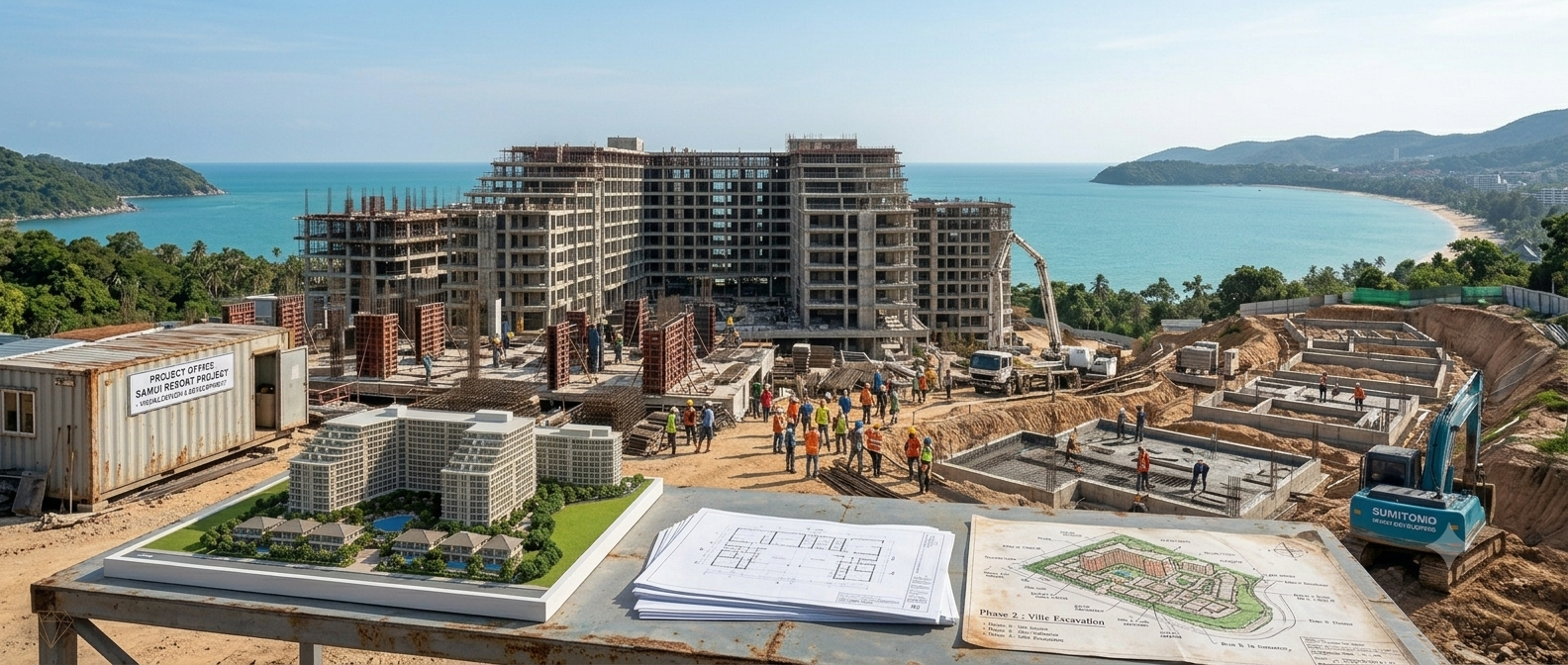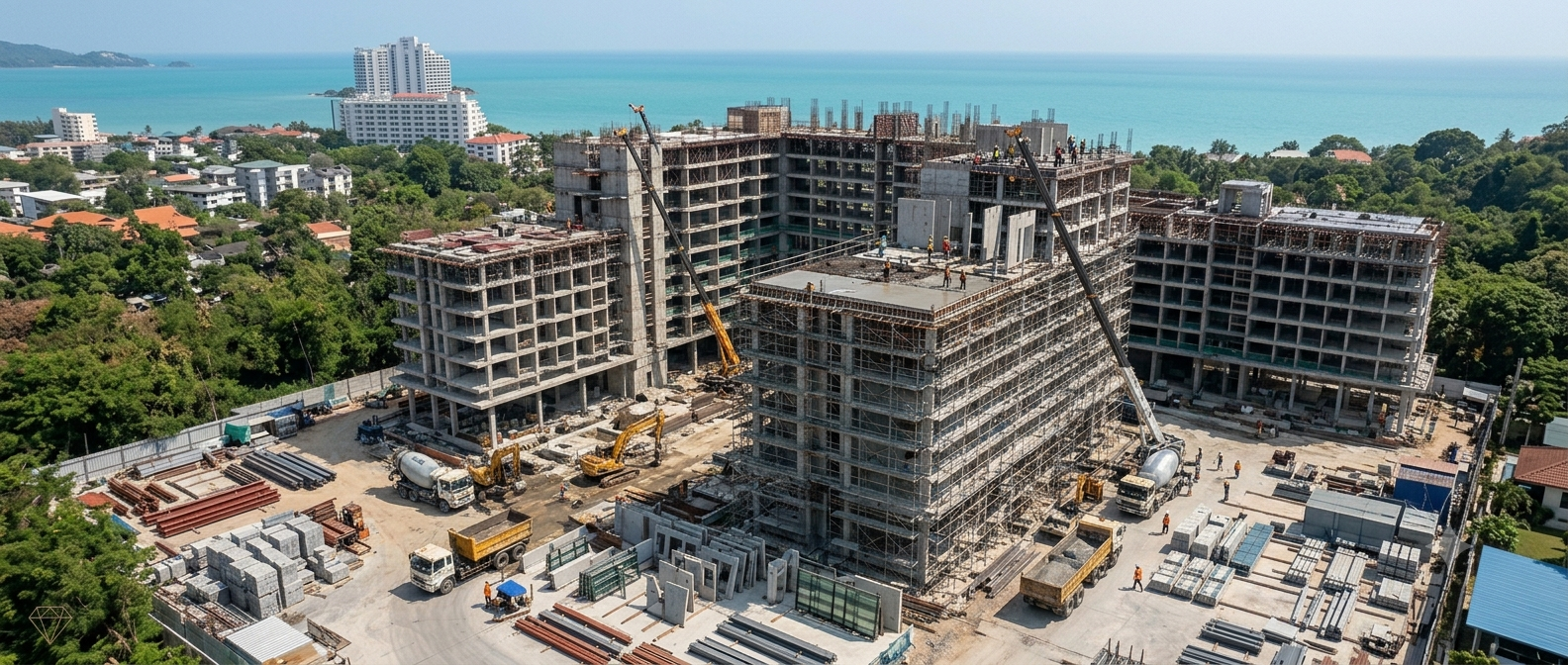
Short answer. Off-plan (buying during construction) means interest-free installments, launch pricing below the finished product and a brand-new unit with peak rental potential — in exchange for construction risk and 1–3 years without income. Resale and completed stock mean income from month one, a real product instead of renders and room to negotiate — in exchange for wear, capex and a product that may trail newer neighbors on rental rates. There is no universal answer — there is your profile. Below: the line-by-line economics of both paths, the hybrid third option everyone forgets, how assignments work, and four buyer profiles with a ready answer each.
The Comparison on One Screen
Criterion | Off-plan (under construction) | Resale / completed |
Entry price | Launch pricing below the finished product; the developer raises prices in stages as construction progresses | Market price here and now; room to negotiate with a motivated seller |
Payments | Installments to handover: reservation → 10–30% → schedule — the cash market's only "stretch" | The full amount by registration (usually within weeks) |
Risk | Construction: timing, quality, the developer; pre-handover money isn't automatically protected | Product: wear, capex, the building's and juristic person's condition |
Income | Zero until handover (typically 1–3 years); then a new product at peak ADR | From month one; ADR below newer neighbors if the product has aged |
What you see at purchase | Renders, a showroom, a contract and the developer's reputation | The actual unit, building, neighbors — and the actual quota |
Due diligence | Developer and permits check is mandatory | Title, building history, CAM and sinking fund, technical condition |
Off-Plan Economics: What You're Actually Paying Less For
A launch price below the finished product isn't generosity: the discount is payment for your risk and your waiting. The developer gets free construction financing (escrow in Thailand is voluntary and most projects skip it); you get a price ahead of the market. As construction progresses the developer raises the price list in stages, and early buyers lock in the difference — if the project completes, on time, at the promised quality. Those three "ifs" are the price of the discount.
Installments are this market's only leverage. Mortgages for foreigners in Thailand barely exist; it's a cash market — and the interest-free schedule to handover is the only legal way to stretch capital: part of your money keeps working while the building rises.
A new product = the top of the rental market. Fresh projects are designed for today's rental demand (lobbies, coworking, pools, short-stay unit mixes) and hold their area's peak ADR for the first years — visible in the rental economics we unpacked in the yields article.
Unit choice. At launch the best floors, views and layouts are available — on the resale market you choose from whatever happens to be for sale.
Off-Plan Risks and How to Close Them
The main risk is obvious: money leaves before the product exists. It's closed by procedure, not hope: a full developer check (the entity in the DBD registry, land title, permits and EIA, litigation, track record) and a payment structure tied to construction milestones or escrow. We've assembled it into a dedicated 10-step developer due diligence checklist — for off-plan it isn't optional; it's step zero of the deal. The second layer is contractual: developer reservation contracts have been OCPB-controlled since 31 January 2025 (15/45-day deposit refunds), and late-delivery penalties plus the quota-exhaustion scenario must sit in your SPA before signing. The third risk is subtler: the product may be finished differently — finish and materials specifications get fixed as a contract annex, otherwise "comparable quality" will be defined by the developer.
The Reputation Premium: Why a Track Record Is Worth the Money
On the same market, a unit from a developer with a fifteen-year portfolio of delivered buildings costs more than a comparable one from a first-year company — and that difference is called the reputation premium. Paying it is usually rational: you're buying the statistics of completed buildings, a functioning warranty service, and the motivation to protect a name worth more than any single project. The flip side of the same rule: a "super-sweet" price from a player with no history isn't a gift — it's the market's pricing of their risk, handed to you as the bill. Where to look for a long track record: the large national developers building across the country for years (Sansiri, Supalai, Origin Property, AP Thailand and other listed companies — their bonus is that a Stock Exchange of Thailand listing forces audited financial reporting, so financial health can be checked for free), and rooted resort players like Laguna Property of the Banyan Tree group on Phuket.
Company mentions illustrate the "long track record" category and are not recommendations: the checklist above is mandatory for any developer, including the most famous.
The convenient way to calibrate prices and compare projects across developers is live supply — all new developments in Thailand: the filter shows developer projects across every market in the country at once.
Resale Economics: What You Buy Along with the Unit
Income from month one. The unit rents immediately — at the island's typical 4–6% net, every year of construction waiting costs real money: on a THB 7.5M unit, two years without rent is ~THB 600K+ of foregone income, and that sum honestly belongs in any comparison against the off-plan discount.
Reality instead of renders. You see the actual view, hear the actual noise, verify the actual foreign quota and read the actual co-owners' meeting minutes — none of these checks exist at the groundbreaking stage.
Negotiation. The resale market has motivated sellers — relocations, urgent exits, inherited units; a 5–10% discount for transaction speed is a reality no developer price list offers.
The hidden part of the price is condition. The wear reserve (~1% of value a year) stops being theory in an older building: aircon, appliances, refurbishment — plus the common property's state. Check the CAM payment history and the sinking fund balance: an empty capital fund in a 10-year-old building means future special assessments that no listing mentions. A separate 2026 window: with the market in selective growth, freshly completed buildings carry a visible layer of investor resales — units bought off-plan for the exit. For a buyer that's negotiation territory: an investor-seller counts money, not emotions. Resale has its tax angle too — the seller's SBT within 5 years of ownership is often priced in: the breakdown is in the taxes article.
One Unit, Two Paths: the 5-Year Math
Let's run both scenarios on the benchmark unit from our yields breakdowns: a 1BR condo of ~45 m² on the tourist west coast, completed price today THB 7.5M, net rent ~THB 321K a year (4.3%). The off-plan version of the same class launches at ~THB 6.8M (a typical order of discount for two years of waiting), with ~30% paid during construction and the balance at handover. The market is base-case — selective growth of ~2% a year, no boom is assumed and no crisis:
Metric (5 years, base-case market) | Path A: completed / resale | Path B: off-plan |
Entry price | THB 7.5M today | ~THB 6.8M at launch pricing |
Payment schedule | Full amount by registration | ~30% during construction (2 years), balance at handover |
Rent over 5 years | ~321K × 5 = ~THB 1.6M | 0 during construction; new unit years 3–5: ~350K × 3 = ~THB 1.05M |
Unit value by year 5 (~+2%/yr) | ~THB 8.3M | ~THB 8.0M (completed from year 2 + 3 years of growth) |
Total: appreciation + rent | ~+THB 2.4M | ~+THB 2.25M |
Total-return benchmark | ~6% a year | ~6% a year on capital; higher IRR thanks to stretched payments |
The path's key risk | Wear and the building's condition; the product ages | The developer: timing, quality, pre-handover money |
The takeaway no salesperson will give you: in a calm base-case market both paths converge to comparable total returns — around 6% a year (the lower bound of the 6–10% frame from our yields guide). Off-plan edges ahead on return-on-capital thanks to the stretched payments — at the cost of lived construction risk and two incomeless years. The paths diverge at the extremes: in a price boom the off-plan buyer captures the entire construction-phase appreciation and pulls away; when a developer fails, the same buyer loses the most. Choosing between the paths is choosing a risk profile — not hunting for "the right answer in percent".
The Third Option Everyone Forgets: Completed Stock from the Developer
Between "the construction pit" and "a ten-year-old resale" sits a hybrid — unsold units in freshly completed buildings. The construction risk is gone (the building stands; you can touch it), the product is new and under developer warranty, the quota is a visible fact — and a developer closing out a project is often more flexible on price and terms than at launch, especially on the last units and in low season. The minus: the best units are taken, and installment plans are shorter or absent. For a conservative buyer who wants a new product without the construction lottery, this is often the optimum. Browse current supply: Phuket new developments — the filter covers both under-construction and completed developer stock, while the full catalog adds the resale market for price comparison.
Assignments: Entering and Exiting Before Handover
An off-plan contract can be sold before the unit transfers — an assignment. The mechanics: the buyer takes over your contract with the developer and its payment schedule; the developer consents and charges an administrative fee (flat or a percentage — check your SPA in advance). For the seller it's an exit without title registration — and therefore without the transfer fee; for the assignment buyer it's a way into a sold-out project, sometimes at a discount from an assignor who needs out. The taker's risks are the standard ones plus one: you inherit a contract you didn't draft — a lawyer's review is mandatory, as is verifying that every past installment was actually paid and documented. The right to assign and its cost are worth checking in the SPA before signing even if you plan to keep the unit: it's your exit insurance.
The 49% Quota: a Different Risk in Each Path
The condominium foreign quota behaves differently. On the resale market it is a fact: the juristic person issues a certificate of the current fill, and you know the status before money moves. In off-plan the quota is a promise: it crystallizes at the building's registration, and if foreign demand exceeded 49% by completion, some buyers get a leasehold offer or a refund instead of freehold — a scenario your SPA must define in money terms, not "at the developer's discretion". How the quota and ownership forms work: the foreigners' ownership rights guide.
Four Profiles — Four Answers
The cash-flow investor: completed stock or resale in deep-tourist-flow areas — income from month one, no construction pause; every year of waiting costs ~4–6% in foregone net yield.
The appreciation investor: off-plan from a fully vetted developer with milestone payments — early pricing plus a new product; the exit can also run through an assignment before handover.
The buyer for living: resale or completed developer stock — you're buying a specific view, noise level and neighbors, not a render; they can only be verified at an existing building.
Limited cash now, inflows later: the off-plan installment plan as the cash market's only legal capital stretch — under strict developer-vetting discipline.
The Pre-Decision Checklist
For off-plan: run the 10-step developer check (the checklist linked above) before the deposit — step zero, not an option.
Compare the full cost of both paths: off-plan price + risk + incomeless years versus resale price + wear + income from month one.
For resale: the quota certificate from the juristic person, CAM history, sinking fund balance, a technical inspection of the unit.
In the off-plan SPA: delay penalties, specifications as an annex, the quota scenario, assignment terms.
Model the rental economics with one method for both paths — the waterfall from the yields article linked above: that's the only honest comparison.
The transaction process and the money transfer (FET) are identical either way: the step-by-step guide; for off-plan, keep the confirmation of every installment tranche.
FAQ
Which is cheaper in Thailand — off-plan or resale?
Per square meter, launch off-plan usually sits below a finished product of the same class — payment for your risk and waiting. But an honest comparison includes the incomeless years (4–6% net annually) and construction risk. Resale can win on total cost of ownership, especially with a negotiated discount from a motivated seller.
How safe is buying off-plan in Thailand?
Exactly as safe as your developer check: escrow is voluntary in Thailand, and pre-handover money is protected only by the quality of your due diligence and your contract. The mandatory minimum: the 10-step check (entity, title, permits, EIA, litigation, track record) and milestone-linked payments. The deposit itself is protected since 31 Jan 2025 by the OCPB rules (15/45-day refunds).
Can I sell an off-plan unit before completion?
Yes — by assigning the contract with the developer's consent and an administrative fee. The seller exits without title registration and thus without the transfer fee; the buyer inherits the contract and schedule — with a mandatory legal review and verification that all past installments were actually paid. Check the assignment terms in the SPA before signing.
What happens if the foreign quota fills before handover?
Some buyers receive a leasehold offer or a refund instead of freehold. Which one is defined by your SPA: push for a full-refund-at-your-choice clause rather than "conversion at the developer's discretion". On the resale market this risk doesn't exist — the quota is verified as a fact before the deal.
Why is completed developer stock sometimes cheaper than it was during construction?
Closing out a project, the developer monetizes the remainder: the last units, less popular layouts, low-season sales — all of it makes them more flexible on price and terms. For the buyer it's a chance at a new product without construction risk — after checking why exactly these units remained.
What happens to my money if the developer goes bankrupt?
The honest answer: without escrow, buyers in an unfinished building are unsecured creditors in the general bankruptcy queue, and the odds of a full recovery are low. The OCPB rules protect only the reservation deposit, not SPA installments. That's why off-plan protection only works preventively: full developer due diligence before the deal, milestone payments or escrow, and a parent group with assets behind the project SPV.
Should I buy at presale from a brand-new developer for the maximum discount?
The maximum presale discount is payment for the maximum risk: a developer with no delivered projects has no track record — the one guarantee that can't be bought. That bet is venture capital, not real estate: acceptable only with money you can afford to lose, with flawless documents and strictly milestone-linked payments. For your first Thai property, it isn't your option.
Do developers offer installments after completion?
Less often and shorter: the standard interest-free plan is a construction-stage tool. Completed units sometimes carry short schedules or project-specific programs, but plan for full payment by registration — mortgage leverage for foreigners barely exists in this market.